A Smarter, Proven, No-Nonsense Approach to Tinnitus Relief - Built for People Who Refuse to “Just Live with It.”

|
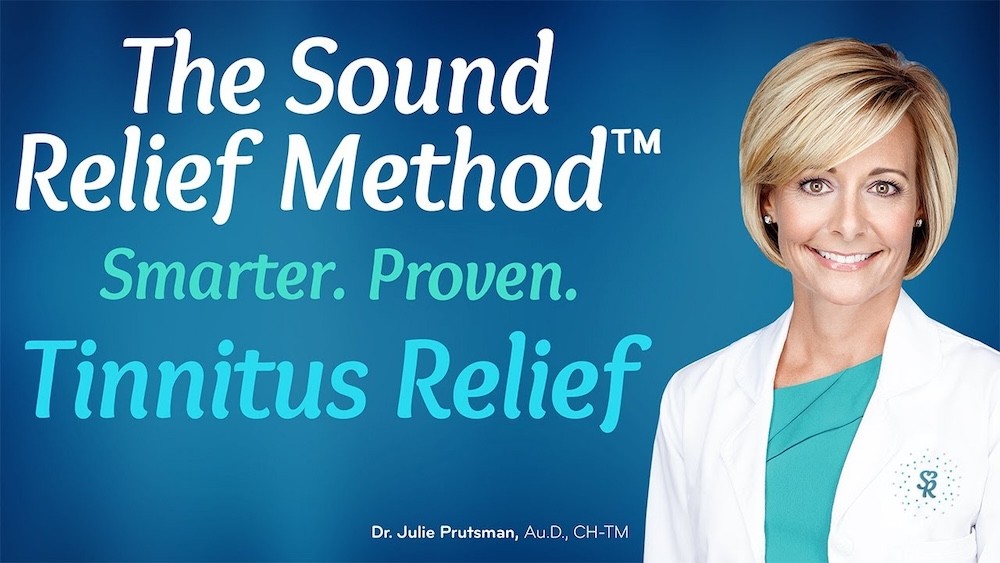
Dr. Julie Prutsman
|
Most people with tinnitus have been disappointed long before they find us.
They’ve been told by well-meaning physicians that “nothing can be done,” handed a masker by an audiologist who doesn’t specialize in tinnitus, or sent home with vague reassurance that eventually they’ll “get used to it”.
Many spend months, even years, trying apps, supplements, gadgets, and YouTube tricks that offer temporary relief at best and disappointment at worst.
None of this reflects what modern tinnitus science is; it simply reflects how fragmented tinnitus care has become.
At Sound Relief, we built a different path because you deserve a different outcome. With decades of experience and thousands of successful patients, we created a method based on what consistently works: not wishful thinking, not shortcuts, and not outdated advice.
“Too many patients are told to ‘live with it.’ I refuse to accept that. With the right tools, the right guidance, and a proven method, the brain can learn to quiet tinnitus, and that changes everything.”- Dr. Julie Prutsman, Au.D., CH-TM
What we now call The Sound Relief Method™ is the culmination of decades of clinical insight, neuroscience research, and hands-on patient care. It’s a structured, comprehensive, deeply personalized approach designed to help people finally break free from what is called the Cognitive Distress Cycle of Tinnitus.
This cycle can make tinnitus feel all-consuming, affecting sleep, focus, mood, and peace of mind.
The Cycle That Makes Tinnitus Unmanageable and How We Break It
Tinnitus begins as a sound, but it becomes a problem because of how the brain and nervous system react to it. A change in the auditory system, whether from hearing loss, noise exposure, or increased neural gain, triggers the tinnitus signal.
But the real suffering starts when the brain assigns meaning to that signal, often interpreting it as something threatening, abnormal, or urgent. That interpretation activates the body’s stress response, and before long, the nervous system is fueling a loop of attention, fear, hypervigilance, and emotional distress.
This is the Cognitive Distress Cycle, and unless it is deliberately retrained, the cycle keeps reinforcing itself.
Most clinics address only one part of this loop. But the Sound Relief Method was created to address all of it: the auditory imbalance that starts the signal, the cognitive response that amplifies it, and the nervous system activation that keeps it alive.
A Method Built for How Tinnitus Actually Works
At the heart of the Sound Relief Method is prescriptive sound therapy, a highly personalized approach that stabilizes and retrains the auditory system rather than merely masking tinnitus.
This is not generic white noise or a built-in hearing aid masker. We carefully calibrate therapeutic sound, tailored to your unique auditory profile and designed to quiet the neural hyperactivity that contributes to tinnitus loudness.
Research has shown that consistent sound enrichment reduces central auditory gain and helps the brain recalibrate, something masking simply cannot do.
But the auditory system is only one part of the cycle. The emotional and cognitive response matters just as much. That is why The Sound Relief Method incorporates CBT-based brain retraining, the most studied and effective tinnitus therapy available today.
CBT helps patients reduce fear, break the attention loop, and transform tinnitus from a source of alarm into something neutral and manageable.
To make CBT accessible and affordable for our patients, we have incorporated Oto, an app-based CBT program, into The Sound Relief Method. Many of our patients use the Oto app daily to reinforce the CBT lessons, creating a continuous bridge between their in-clinic care and at-home practice.
The third element, the nervous system, is often ignored entirely in traditional tinnitus care, even though it plays a major role in whether tinnitus is perceived as loud or quiet, overwhelming or irrelevant.
Stress amplifies tinnitus. Calm reduces it. This isn’t speculation; it’s physiology.
That’s why the Sound Relief Method teaches patients to downregulate the autonomic nervous system through targeted sound therapy and practices that help lower adrenaline levels, reduce sensory sensitivity, and restore balance.
And finally, none of this works without expert guidance. Tinnitus care is not a “one-and-done” appointment. It requires a knowledgeable professional who can evaluate root causes, personalize treatment, and make ongoing adjustments as your brain and auditory system begin to change.
Our doctors specialize in tinnitus and sound hypersensitivity, and nothing replaces the impact of consistent, skilled follow-up.
Together, these elements form a treatment approach that doesn’t just help patients cope.
It helps them change how their tinnitus behaves and how their brain perceives it.
Why This Works When So Many Other Approaches Don’t
The biggest misunderstanding in tinnitus care is the belief that one tool alone should fix everything: a device, an app, a supplement, a sound machine.
However, tinnitus is not a one-system issue. It is a full-loop interaction between your auditory pathways, your thought patterns, and your nervous system. No single tool can retrain that loop on its own.
The Sound Relief Method works because it is built on how tinnitus actually operates.
Prescriptive sound therapy addresses the auditory trigger. CBT retrains the interpretation. Nervous system regulation cools the reaction. And expert audiology care ensures that all parts of the cycle move in the right direction together.
You don’t just get a temporary distraction; instead, you get a long-lasting transformation.
What Progress Really Looks Like
When we begin to break down the Cognitive Distress Cycle, patients often describe a subtle yet powerful shift: the sound no longer feels urgent. It stops triggering stress. It stops interrupting their day.
Over time, tinnitus becomes less reactive, less intrusive, and significantly quieter. Sleep improves. Concentration returns. Emotional tension fades. Life begins to feel normal again.
For some people, this shift happens quickly. For others, it builds gradually. But in both cases, the pattern is the same: the moment the cycle loses its grip, tinnitus loses its power.
When patients commit to the Sound Relief Method and remain consistent throughout the process, we see 85–90% of people experience significant improvement. Not a cure, not silence, but true, long-lasting tinnitus remission.
The tinnitus stops dominating, stops spiking with stress, and stops dictating every waking moment. It becomes something your brain can finally set aside.
Who Benefits Most
The Sound Relief Method is especially effective for individuals whose tinnitus affects their sleep, mood, focus, or daily life, particularly those who feel overwhelmed by spikes, whose tinnitus worsens with stress, who have tried masking without success, or who simply feel stuck.
It is also highly effective for people with sound hypersensitivity, whose nervous systems need careful guidance back toward balance.
The Sound Relief Method is also appropriate for people with tinnitus who prefer a more proactive approach to treating it, even if their tinnitus is intermittent or not always bothersome.
Many of these same people do not want their symptoms to get any worse or more intrusive. As with most chronic health conditions, early intervention for tinnitus is key to achieving successful outcomes.
What We Don’t Do… Because You Deserve Better!
We don’t make empty promises.
We don’t rely on masking alone.
We don’t treat tinnitus as an afterthought.
We don’t sell quick fixes.
And we certainly don’t suggest you “just live with it.”
What we offer instead is a method grounded in science, strengthened by experience, and delivered with the compassion and clarity patients have needed all along.
Research Behind the Method
Modern studies consistently show that CBT reduces tinnitus distress and improves quality of life
Prescriptive sound therapy helps regulate central auditory gain and stabilize neural firing patterns.
Stress strongly influences tinnitus perception. Consistent daily practice is associated with better long-term outcomes. And integrated, multidisciplinary approaches outperform single-intervention treatment models.
This is the foundation on which the Sound Relief Method is built.
Your Turning Point Starts Here
Tinnitus won’t improve by waiting. It improves when the Cognitive Distress Cycle of Tinnitus is gently and systematically reversed with the right tools, structure, and guidance from an audiologist who truly understands what you are experiencing.
If you’re ready for your relationship with tinnitus to change, we are ready to help you get there.
Side Note: Why We Do Not Use Lenire, and How It Differs from the Sound Relief Method
Patients often ask us about Lenire, especially given all the buzz surrounding bimodal stimulation.
We appreciate the excitement around new tinnitus technologies as innovation is always welcome in this field, but we made the deliberate clinical decision not to adopt Lenire at this time.
Here’s why.
“New technology is exciting, but our responsibility is to offer what truly works. Until a treatment shows consistent, long-term results across the majority of patients, we will always choose proven results over hype.”- Dr. Julie Prutsman, Au.D., CH-TM
Lenire uses electrical stimulation on the tongue combined with tinnitus specific sound in the ears. While the idea of bimodal stimulation is grounded in interesting neuroscience, the current evidence behind Lenire has several limitations.
Published studies show mixed outcomes: some patients report improvement, while others report minimal or no benefit. More importantly, the research lacks the consistency and long-term follow-up data we rely on when adopting a clinical tool.
Several key studies were funded or conducted internally, and independent replication is still limited.
Another challenge is that Lenire’s treatment model focuses on an expensive, device-driven protocol that does not address all the systems involved in tinnitus.
In contrast, real tinnitus improvement requires personalized long-term management, careful monitoring, and adjustments that support the full Cognitive Distress Cycle.
The Sound Relief Method is built on a comprehensive, multi-system approach supported by decades of research in CBT, prescriptive sound therapy, and nervous system regulation. These components have consistent, independently validated evidence and align with how tinnitus actually behaves across the auditory, cognitive, and stress systems.
We also closely monitor patient experiences across the tinnitus community. While many individuals have reported positive outcomes with Lenire, many have reported none.
Without calming the nervous system down and reframing how the brain labels and reacts to tinnitus, bimodal stimulation alone is most likely not enough, which is probably why mixed results with Lenire are currently being reported.
The inconsistency mirrors the variability in the research, which makes it a tool we are watching closely but not ready to use as a primary intervention. Our standard is simple: if a treatment does not demonstrate clear, reproducible, and long-term benefit for the majority of patients, we do not adopt it.
By contrast, the Sound Relief Method continues to deliver 85–90% success, measured in long-lasting tinnitus remission, not temporary distraction or short-lived improvement.
Until more independent, long-term research emerges that clearly establishes Lenire’s effectiveness, durability, and fit within the broader tinnitus retraining framework, we will continue to rely on the treatments we know work best for the people we serve.