Precision Sound Therapy for Tinnitus Treatment: A Personalized, Measurable Approach
If you are searching for an effective tinnitus treatment, you have likely already realized that not all approaches are the same. Many options focus on masking the sound or helping you cope with it, but few are designed to directly address the underlying changes in the auditory system that contribute to tinnitus.

Precision Sound Therapy for Tinnitus Treatment: A Personalized, Measurable Approach
If you are searching for an effective tinnitus treatment, you have likely already realized that not all approaches are the same. Many options focus on masking the sound or helping you cope with it, but few are designed to directly address the underlying changes in the auditory system that contribute to tinnitus.
Precision Sound Therapy for Tinnitus Treatment: A Personalized, Measurable Approach
If you are searching for an effective tinnitus treatment, you have likely already realized that not all approaches are the same. Many options focus on masking the sound or helping you cope with it, but few are designed to directly address the underlying changes in the auditory system that contribute to tinnitus.
Precision Sound Therapy
One of the newest and most exciting developments in the field of audiology is a tinnitus treatment launched by Frequency Health, formerly AudioCardio™. This protocol utilizes two exclusive tools, Tinnitogram™ and REVE134™, to deliver precision sound therapy at an entirely new level.
Sound Relief Tinnitus & Hearing Center is currently offering this revolutionary new treatment in Highlands Ranch and Fort Collins, Colorado. We use advanced tools like these to better understand tinnitus and build a personalized, measurable treatment plan designed to reduce tinnitus over time.

Why Tinnitus Can Be So Difficult to Understand
One of the most frustrating things patients hear is: “Your hearing test is normal,” and yet, the tinnitus is still there. This happens because traditional hearing tests were never designed to capture every finite detail of how your auditory system is functioning.
Standard hearing tests measure a limited number of sound frequencies, whereas tinnitus often exists in very specific, narrow regions between those test points. So, while your hearing may appear normal on paper, it may not tell the full story.
Tinnitogram™: A Microscope for Your Hearing
To better understand tinnitus, we need a more detailed view of hearing: more specifically, a precise map of what is happening in the inner ear.
Tinnitogram™ is a fine-grain measure of hearing acuity that identifies hearing thresholds at 67 frequencies from 262 Hz to 11,840 Hz, whereas a standard exam may measure thresholds at only 8 frequencies from 250 Hz to 8000 Hz.
This level of detail provides audiologists with a high-resolution view of a patient’s hearing profile, thus uncovering areas of concern, such as:
Subtle changes in hearing sensitivity that are often missed
Small “notches” that may be linked to tinnitus
Patterns that are not visible on a traditional hearing test
For many patients, this is the first time their tinnitus begins to make sense. Instead of feeling abstract, it becomes something we can see, measure, and track because we have a precise view of what is happening in the auditory system.
Precision Sound Therapy: Turning That Information into a Tinnitus Management Plan
Once we fully understand your tinnitus and hearing profile, the next step is to create sound therapy specific to you. This is what makes Frequency Health’s approach so special. Instead of using the same sound for everyone, like ocean waves, rain, or something soothing, your therapy is:
Based on your unique hearing profile
Matched to the precise characteristics of your tinnitus
Designed to evolve as your auditory system changes
We use the results from the 67-frequency Tinnitogram™ to find the four center frequencies of a patient’s tinnitus. Then the REVE134™ software determines the softest detectable levels of these center frequencies to customize a sound therapy signal.
This signal is converted to an MP3 file and downloaded to an MP3 player. Patients listen to their precision sound therapy for at least 1 hour per day for 30 days. This process is repeated three times for maximum effect (i.e., 3 different sound files used, each for 30-days, for a total of 12 weeks minimum).
Precision Sound Therapy
One of the newest and most exciting developments in the field of audiology is a tinnitus treatment launched by Frequency Health, formerly AudioCardio™. This protocol utilizes two exclusive tools, Tinnitogram™ and REVE134™, to deliver precision sound therapy at an entirely new level.
Sound Relief Tinnitus & Hearing Center is currently offering this revolutionary new treatment in Highlands Ranch and Fort Collins, Colorado. We use advanced tools like these to better understand tinnitus and build a personalized, measurable treatment plan designed to reduce tinnitus over time.
Why Tinnitus Can Be So Difficult to Understand
One of the most frustrating things patients hear is: “Your hearing test is normal,” and yet, the tinnitus is still there. This happens because traditional hearing tests were never designed to capture every finite detail of how your auditory system is functioning.
Standard hearing tests measure a limited number of sound frequencies, whereas tinnitus often exists in very specific, narrow regions between those test points. So, while your hearing may appear normal on paper, it may not tell the full story.
Tinnitogram™: A Microscope for Your Hearing
To better understand tinnitus, we need a more detailed view of hearing: more specifically, a precise map of what is happening in the inner ear.
Tinnitogram™ is a fine-grain measure of hearing acuity that identifies hearing thresholds at 67 frequencies from 262 Hz to 11,840 Hz, whereas a standard exam may measure thresholds at only 8 frequencies from 250 Hz to 8000 Hz.
This level of detail provides audiologists with a high-resolution view of a patient’s hearing profile, thus uncovering areas of concern, such as:
Subtle changes in hearing sensitivity that are often missed
Small “notches” that may be linked to tinnitus
Patterns that are not visible on a traditional hearing test
For many patients, this is the first time their tinnitus begins to make sense. Instead of feeling abstract, it becomes something we can see, measure, and track because we have a precise view of what is happening in the auditory system.
Precision Sound Therapy: Turning That Information into a Tinnitus Management Plan
Once we fully understand your tinnitus and hearing profile, the next step is to create sound therapy specific to you. This is what makes Frequency Health’s approach so special. Instead of using the same sound for everyone, like ocean waves, rain, or something soothing, your therapy is:
Based on your unique hearing profile
Matched to the precise characteristics of your tinnitus
Designed to evolve as your auditory system changes
We use the results from the 67-frequency Tinnitogram™ to find the four center frequencies of a patient’s tinnitus. Then the REVE134™ software determines the softest detectable levels of these center frequencies to customize a sound therapy signal.
This signal is converted to an MP3 file and downloaded to an MP3 player. Patients listen to their precision sound therapy for at least 1 hour per day for 30 days. This process is repeated three times for maximum effect (i.e., 3 different sound files used, each for 30-days, for a total of 12 weeks minimum).
Precision Sound Therapy
One of the newest and most exciting developments in the field of audiology is a tinnitus treatment launched by Frequency Health, formerly AudioCardio™. This protocol utilizes two exclusive tools, Tinnitogram™ and REVE134™, to deliver precision sound therapy at an entirely new level.
Sound Relief Tinnitus & Hearing Center is currently offering this revolutionary new treatment in Highlands Ranch and Fort Collins, Colorado. We use advanced tools like these to better understand tinnitus and build a personalized, measurable treatment plan designed to reduce tinnitus over time.
Why Tinnitus Can Be So Difficult to Understand
One of the most frustrating things patients hear is: “Your hearing test is normal,” and yet, the tinnitus is still there. This happens because traditional hearing tests were never designed to capture every finite detail of how your auditory system is functioning.
Standard hearing tests measure a limited number of sound frequencies, whereas tinnitus often exists in very specific, narrow regions between those test points. So, while your hearing may appear normal on paper, it may not tell the full story.
Tinnitogram™: A Microscope for Your Hearing
To better understand tinnitus, we need a more detailed view of hearing: more specifically, a precise map of what is happening in the inner ear.
Tinnitogram™ is a fine-grain measure of hearing acuity that identifies hearing thresholds at 67 frequencies from 262 Hz to 11,840 Hz, whereas a standard exam may measure thresholds at only 8 frequencies from 250 Hz to 8000 Hz.
This level of detail provides audiologists with a high-resolution view of a patient’s hearing profile, thus uncovering areas of concern, such as:
Subtle changes in hearing sensitivity that are often missed
Small “notches” that may be linked to tinnitus
Patterns that are not visible on a traditional hearing test
For many patients, this is the first time their tinnitus begins to make sense. Instead of feeling abstract, it becomes something we can see, measure, and track because we have a precise view of what is happening in the auditory system.
Precision Sound Therapy: Turning That Information into a Tinnitus Management Plan
Once we fully understand your tinnitus and hearing profile, the next step is to create sound therapy specific to you. This is what makes Frequency Health’s approach so special. Instead of using the same sound for everyone, like ocean waves, rain, or something soothing, your therapy is:
Based on your unique hearing profile
Matched to the precise characteristics of your tinnitus
Designed to evolve as your auditory system changes
We use the results from the 67-frequency Tinnitogram™ to find the four center frequencies of a patient’s tinnitus. Then the REVE134™ software determines the softest detectable levels of these center frequencies to customize a sound therapy signal.
This signal is converted to an MP3 file and downloaded to an MP3 player. Patients listen to their precision sound therapy for at least 1 hour per day for 30 days. This process is repeated three times for maximum effect (i.e., 3 different sound files used, each for 30-days, for a total of 12 weeks minimum).
This Is Not About Masking Tinnitus
Many people are familiar with white noise or masking, an approach that tries to cover tinnitus with another sound. While masking might provide temporary relief, it does not address the underlying issue in the auditory system. Masking is at best a “band-aid” approach that does nothing to rewire the brain or address the auditory changes associated with tinnitus.
Precision sound therapy is different. Delivered at a very low, almost inaudible level, often just below the tinnitus itself, precision sound therapy is designed to gently stimulate the auditory system. Over time, this sound conditioning may help the brain:
Reduce inflammation in and around the auditory structures
Strengthen connections between auditory cells
Receive proper electrical signals that were once deficient
Rebalance how sound is processed
Reduce sensitivity and perception of tinnitus
Decrease how noticeable or intrusive tinnitus feels
In simpler terms, we are not covering up the sound; instead, we are rewiring your auditory system, resulting in reduced tinnitus volume over time and potentially improved hearing.
This Is Not About Masking Tinnitus
Many people are familiar with white noise or masking, an approach that tries to cover tinnitus with another sound. While masking might provide temporary relief, it does not address the underlying issue in the auditory system. Masking is at best a “band-aid” approach that does nothing to rewire the brain or address the auditory changes associated with tinnitus.
Precision sound therapy is different. Delivered at a very low, almost inaudible level, often just below the tinnitus itself, precision sound therapy is designed to gently stimulate the auditory system. Over time, this sound conditioning may help the brain:
Reduce inflammation in and around the auditory structures
Strengthen connections between auditory cells
Receive proper electrical signals that were once deficient
Rebalance how sound is processed
Reduce sensitivity and perception of tinnitus
Decrease how noticeable or intrusive tinnitus feels
In simpler terms, we are not covering up the sound; instead, we are rewiring your auditory system, resulting in reduced tinnitus volume over time and potentially improved hearing.
This Is Not About Masking Tinnitus
Many people are familiar with white noise or masking, an approach that tries to cover tinnitus with another sound. While masking might provide temporary relief, it does not address the underlying issue in the auditory system. Masking is at best a “band-aid” approach that does nothing to rewire the brain or address the auditory changes associated with tinnitus.
Precision sound therapy is different. Delivered at a very low, almost inaudible level, often just below the tinnitus itself, precision sound therapy is designed to gently stimulate the auditory system. Over time, this sound conditioning may help the brain:
Reduce inflammation in and around the auditory structures
Strengthen connections between auditory cells
Receive proper electrical signals that were once deficient
Rebalance how sound is processed
Reduce sensitivity and perception of tinnitus
Decrease how noticeable or intrusive tinnitus feels
In simpler terms, we are not covering up the sound; instead, we are rewiring your auditory system, resulting in reduced tinnitus volume over time and potentially improved hearing.
The Science Behind This Approach
Over the past two decades, research has helped us better understand tinnitus. We know today that tinnitus is a brain-generated phenomenon resulting from changes in the inner ear and/or auditory pathways to the brain. One theory is that if we can reduce the hyperactivity of damaged auditory cells, we can reduce the loudness of tinnitus.
Frequency Health’s precision sound therapy approach is based on threshold sound conditioning, or TSC. TSC was originally studied to improve hearing acuity. By training passive auditory cells in a very specific frequency bandwidth to become active again through low-level stimulation, missing electrical signals can be delivered to the brain, thereby improving hearing.
TSC has also been found to reduce tinnitus by stimulating, stabilizing, and strengthening damaged hair cells (and their connections) in the inner ear. Once the hair cells become more stable due to low-level stimulation by a highly customized sound therapy (i.e., based on the 67-frequency Tinnitogram™), less tinnitus is perceived. This process can be repeated over time to achieve even more benefit and reduction in tinnitus intensity. A secondary benefit is often improved hearing in this region as well.
Research also supports the idea that Frequency Health’s low-level stimulation of the cochlea could reduce free radicals and increase antioxidant activity in the inner ear. This combination could reduce inflammation and potentially repair damaged inner ear hair cells that are responsible for hearing and contribute to tinnitus. In theory, reduced inflammation to the auditory structures could be the primary reason for improved hearing thresholds and reduced tinnitus intensity reported by patients using precision sound therapy.
The Science Behind This Approach
Over the past two decades, research has helped us better understand tinnitus. We know today that tinnitus is a brain-generated phenomenon resulting from changes in the inner ear and/or auditory pathways to the brain. One theory is that if we can reduce the hyperactivity of damaged auditory cells, we can reduce the loudness of tinnitus.
Frequency Health’s precision sound therapy approach is based on threshold sound conditioning, or TSC. TSC was originally studied to improve hearing acuity. By training passive auditory cells in a very specific frequency bandwidth to become active again through low-level stimulation, missing electrical signals can be delivered to the brain, thereby improving hearing.
TSC has also been found to reduce tinnitus by stimulating, stabilizing, and strengthening damaged hair cells (and their connections) in the inner ear. Once the hair cells become more stable due to low-level stimulation by a highly customized sound therapy (i.e., based on the 67-frequency Tinnitogram™), less tinnitus is perceived. This process can be repeated over time to achieve even more benefit and reduction in tinnitus intensity. A secondary benefit is often improved hearing in this region as well.
Research also supports the idea that Frequency Health’s low-level stimulation of the cochlea could reduce free radicals and increase antioxidant activity in the inner ear. This combination could reduce inflammation and potentially repair damaged inner ear hair cells that are responsible for hearing and contribute to tinnitus. In theory, reduced inflammation to the auditory structures could be the primary reason for improved hearing thresholds and reduced tinnitus intensity reported by patients using precision sound therapy.
The Science Behind This Approach
Over the past two decades, research has helped us better understand tinnitus. We know today that tinnitus is a brain-generated phenomenon resulting from changes in the inner ear and/or auditory pathways to the brain. One theory is that if we can reduce the hyperactivity of damaged auditory cells, we can reduce the loudness of tinnitus.
Frequency Health’s precision sound therapy approach is based on threshold sound conditioning, or TSC. TSC was originally studied to improve hearing acuity. By training passive auditory cells in a very specific frequency bandwidth to become active again through low-level stimulation, missing electrical signals can be delivered to the brain, thereby improving hearing.
TSC has also been found to reduce tinnitus by stimulating, stabilizing, and strengthening damaged hair cells (and their connections) in the inner ear. Once the hair cells become more stable due to low-level stimulation by a highly customized sound therapy (i.e., based on the 67-frequency Tinnitogram™), less tinnitus is perceived. This process can be repeated over time to achieve even more benefit and reduction in tinnitus intensity. A secondary benefit is often improved hearing in this region as well.
Research also supports the idea that Frequency Health’s low-level stimulation of the cochlea could reduce free radicals and increase antioxidant activity in the inner ear. This combination could reduce inflammation and potentially repair damaged inner ear hair cells that are responsible for hearing and contribute to tinnitus. In theory, reduced inflammation to the auditory structures could be the primary reason for improved hearing thresholds and reduced tinnitus intensity reported by patients using precision sound therapy.
Go! Don’t continue to second guess or think the problem will just go away.
– Marilyn B.

Do it!! Don’t wait and don’t hesitate. They are with you helping every step of the way.
– Dawn F.

Don’t wait another day.
– Robert W.

Go and experience it for yourself.
– Frank S.

The longer you wait the side effects worsen. It can be more hearing loss than you thought & easy to fix. Get tested.
– Sue W.

For the first time in well over a year, I felt as if maybe there was hope.
– Chris S.
I strongly encourage everyone to schedule an assessment with Sound Relief to determine options to improve their quality of life.
– Dr. Kraig P.

Sound Relief has provided me with the tools that have allowed me to start living life again. It sounds dramatic, but it’s real.
– Mark H.
Please visit Sound Relief to see for yourself how they can help.
– Steve A.

I would encourage them to check it out. It could really improve quality of life.
– Vern R.

If you have hearing issues, go, go and go.
– Guy W.

Just give them a try. Give them a chance to help you.
- Teri M
You won't regret going. Very helpful and very pleasant to deal with.
– Lisa D.
Go for it!!
– Galen D.
If you don't take the time to get treatment, it won't get better on its own.
– Todd S.
Don't wait, these people are excellent, caring, and no pressure to buy anything.
– Gary E.
Waiting and tolerating tinnitus is not the answer. They will help you!
– Bruce T.
Go here first
– Barbara M.
I forgot I ever had tinnitus and forgot all about it.
Anonymous 13
Seeking help was one of the best things I ever did.
– Terry K.
I would encourage them to consider you as their first stop.
Anonymous
Go immediately
Anonymous
Go right away. You don't realize how great it is to hear!
– Virginia M.
Don’t wait, do it.
– Linda V.
You won't be sorry.
– Pat G.
The Frequency Health / AudioCardio Relationship
Frequency Health was previously known as AudioCardio. AudioCardio was best known for its app, which addresses hearing challenges and offers relief from tinnitus for some people.
However, to clear up confusion between the app and the robust medical model, Frequency Health was created to represent the audiologist-led treatment protocol. The name change is recent, so all research on AudioCardio applies to Frequency Health.
The two offerings are quite different:
The AudioCardio App
Designed for general use – only looks at 8 pitches (or frequencies) for tinnitus
Self-guided
Limited ability to measure detailed hearing changes
No clinical oversight
More of a “demo mode” of their full program
Audiologist-Led Frequency Health Tinnitus Treatment
Guided by an audiologist
Includes detailed hearing analysis, measuring 67 frequencies using the Tinnitogram™
Precision sound therapy is customized based on test results (REVE134™)
Adjusted over time as you progress, at least 3 sessions needed for maximum benefit
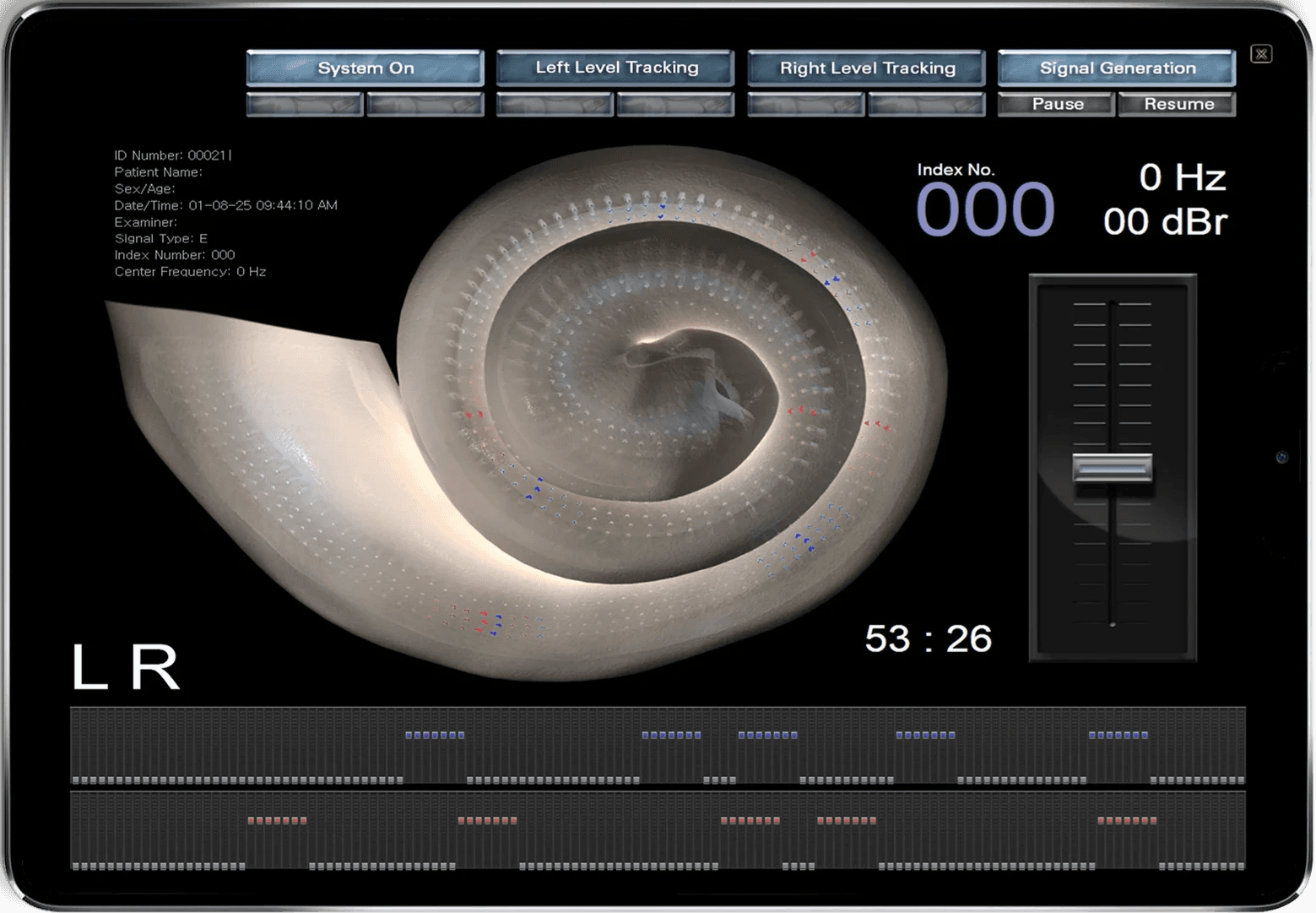
By working with a specially trained audiologist in Frequency Health’s protocols, patients can expect significantly better outcomes. As tinnitus varies greatly between individuals, the more precisely we can measure it, the more effectively we can program the sound therapy to be exact and guide treatment. This process has been shown to be most effective with at least 3 sessions. During these sessions with a trained audiologist, we adapt the sound therapy to your changing auditory system after further analysis.
Tinnitus Treatment Protocol Expectations
Our structured process is designed to be clear and manageable. After we have completed a comprehensive tinnitus evaluation, and if you are a candidate for precision sound therapy, this is what to expect:
With the results of your Tinnitogram™, we will use REVE134™ to generate a precision sound therapy MP3. This sound file will be loaded onto an MP3 player with specially calibrated earbuds which you will use for the first 30 days.
** Daily Use is extremely important to the efficacy of this protocol. **
For the next 30 days, you will listen to your precision sound therapy:
For at least 60 minutes per day: Every day.
At a very low, almost imperceptible level
While relaxing or doing everyday activities
Follow-Up Visits and Fine tuning
At the end of the first and second months, we repeat most of the same steps to generate an even more precise sound therapy MP3. During these appointments, we will:
Assess your progress
Repeat the Tinnitogram™ to measure the 67-frequency response
Create a more finely tuned sound therapy program using the REVE134™ software
Download the new sound file to your MP3 player
Make sure you are moving in the right direction
These steps are essential, as they keep your treatment aligned with your progress and goals. After the three Tinnitogram™ measurements and REVE134™ sound files are completed, your visits to Sound Relief are complete. Most use the final MP3 on an ongoing basis for maintenance to keep tinnitus spikes at bay.
What Results Can You Expect?
While there is no universal cure for tinnitus, there are effective ways to reduce its impact on your life, and in many cases, decrease the intensity of the tinnitus to barely perceptible levels.
With precise sound therapy, patients experience the following in relations to their tinnitus:
Reduced loudness or intensity
Changes in pitch perception
Less frequent awareness overall
Better focus and sleep
Less stress and more calm
Improved quality of life
Even more exciting is the drastically reduced timeline required to find significant relief.
Why This Process Takes Time
Constant, bothersome tinnitus does not typically develop overnight. It is the result of changes in how the auditory system and brain interact over time. Considering that, improvement also takes time.
This approach relies on the brain’s ability to rewire, or neuroplasticity, a process that happens gradually with consistent input and precise stimulation.
Most patients notice changes within several weeks, with more meaningful improvement developing over a few months. That is not a limitation; rather, it reflects how the brain works.
Like physical therapy, we must precisely stimulate the affected areas of the inner ear to help them realign and reduce their hyperactivity. When the auditory system and brain rewire, the result is less tinnitus awareness and less annoyance.
Who are the Best Candidates for Precise Sound Therapy
We recommend this approach to patients who:
Have ongoing tinnitus that is bothersome
Possess healthy cognitive function
Have been told your hearing is normal, but you are annoyed by tinnitus
Only have an hour per day to commit to sound therapy
Want a more precise approach to sound therapy
Willing to follow a consistent plan (for at least 12 weeks)
*Keynote: If you have severe high-frequency hearing loss with tinnitus, precision sound therapy might not work for you due to the possibility of “cochlear dead regions”. Ask your audiologist more about this if you have been told you have severe hearing loss associated with your tinnitus.
Tinnitus Treatment Protocol Expectations
Our structured process is designed to be clear and manageable. After we have completed a comprehensive tinnitus evaluation, and if you are a candidate for precision sound therapy, this is what to expect:
With the results of your Tinnitogram™, we will use REVE134™ to generate a precision sound therapy MP3. This sound file will be loaded onto an MP3 player with specially calibrated earbuds which you will use for the first 30 days.
** Daily Use is extremely important to the efficacy of this protocol. **
For the next 30 days, you will listen to your precision sound therapy:
For at least 60 minutes per day: Every day.
At a very low, almost imperceptible level
While relaxing or doing everyday activities
Follow-Up Visits and Fine tuning
At the end of the first and second months, we repeat most of the same steps to generate an even more precise sound therapy MP3. During these appointments, we will:
Assess your progress
Repeat the Tinnitogram™ to measure the 67-frequency response
Create a more finely tuned sound therapy program using the REVE134™ software
Download the new sound file to your MP3 player
Make sure you are moving in the right direction
These steps are essential, as they keep your treatment aligned with your progress and goals. After the three Tinnitogram™ measurements and REVE134™ sound files are completed, your visits to Sound Relief are complete. Most use the final MP3 on an ongoing basis for maintenance to keep tinnitus spikes at bay.
What Results Can You Expect?
While there is no universal cure for tinnitus, there are effective ways to reduce its impact on your life, and in many cases, decrease the intensity of the tinnitus to barely perceptible levels.
With precise sound therapy, patients experience the following in relations to their tinnitus:
Reduced loudness or intensity
Changes in pitch perception
Less frequent awareness overall
Better focus and sleep
Less stress and more calm
Improved quality of life
Even more exciting is the drastically reduced timeline required to find significant relief.
Why This Process Takes Time
Constant, bothersome tinnitus does not typically develop overnight. It is the result of changes in how the auditory system and brain interact over time. Considering that, improvement also takes time.
This approach relies on the brain’s ability to rewire, or neuroplasticity, a process that happens gradually with consistent input and precise stimulation.
Most patients notice changes within several weeks, with more meaningful improvement developing over a few months. That is not a limitation; rather, it reflects how the brain works.
Like physical therapy, we must precisely stimulate the affected areas of the inner ear to help them realign and reduce their hyperactivity. When the auditory system and brain rewire, the result is less tinnitus awareness and less annoyance.
Who are the Best Candidates for Precise Sound Therapy
We recommend this approach to patients who:
Have ongoing tinnitus that is bothersome
Possess healthy cognitive function
Have been told your hearing is normal, but you are annoyed by tinnitus
Only have an hour per day to commit to sound therapy
Want a more precise approach to sound therapy
Willing to follow a consistent plan (for at least 12 weeks)
*Keynote: If you have severe high-frequency hearing loss with tinnitus, precision sound therapy might not work for you due to the possibility of “cochlear dead regions”. Ask your audiologist more about this if you have been told you have severe hearing loss associated with your tinnitus.
Tinnitus Treatment Protocol Expectations
Our structured process is designed to be clear and manageable. After we have completed a comprehensive tinnitus evaluation, and if you are a candidate for precision sound therapy, this is what to expect:
With the results of your Tinnitogram™, we will use REVE134™ to generate a precision sound therapy MP3. This sound file will be loaded onto an MP3 player with specially calibrated earbuds which you will use for the first 30 days.
** Daily Use is extremely important to the efficacy of this protocol. **
For the next 30 days, you will listen to your precision sound therapy:
For at least 60 minutes per day: Every day.
At a very low, almost imperceptible level
While relaxing or doing everyday activities
Follow-Up Visits and Fine tuning
At the end of the first and second months, we repeat most of the same steps to generate an even more precise sound therapy MP3. During these appointments, we will:
Assess your progress
Repeat the Tinnitogram™ to measure the 67-frequency response
Create a more finely tuned sound therapy program using the REVE134™ software
Download the new sound file to your MP3 player
Make sure you are moving in the right direction
These steps are essential, as they keep your treatment aligned with your progress and goals. After the three Tinnitogram™ measurements and REVE134™ sound files are completed, your visits to Sound Relief are complete. Most use the final MP3 on an ongoing basis for maintenance to keep tinnitus spikes at bay.
What Results Can You Expect?
While there is no universal cure for tinnitus, there are effective ways to reduce its impact on your life, and in many cases, decrease the intensity of the tinnitus to barely perceptible levels.
With precise sound therapy, patients experience the following in relations to their tinnitus:
Reduced loudness or intensity
Changes in pitch perception
Less frequent awareness overall
Better focus and sleep
Less stress and more calm
Improved quality of life
Even more exciting is the drastically reduced timeline required to find significant relief.
Why This Process Takes Time
Constant, bothersome tinnitus does not typically develop overnight. It is the result of changes in how the auditory system and brain interact over time. Considering that, improvement also takes time.
This approach relies on the brain’s ability to rewire, or neuroplasticity, a process that happens gradually with consistent input and precise stimulation.
Most patients notice changes within several weeks, with more meaningful improvement developing over a few months. That is not a limitation; rather, it reflects how the brain works.
Like physical therapy, we must precisely stimulate the affected areas of the inner ear to help them realign and reduce their hyperactivity. When the auditory system and brain rewire, the result is less tinnitus awareness and less annoyance.
Who are the Best Candidates for Precise Sound Therapy
We recommend this approach to patients who:
Have ongoing tinnitus that is bothersome
Possess healthy cognitive function
Have been told your hearing is normal, but you are annoyed by tinnitus
Only have an hour per day to commit to sound therapy
Want a more precise approach to sound therapy
Willing to follow a consistent plan (for at least 12 weeks)
*Keynote: If you have severe high-frequency hearing loss with tinnitus, precision sound therapy might not work for you due to the possibility of “cochlear dead regions”. Ask your audiologist more about this if you have been told you have severe hearing loss associated with your tinnitus.
How Effective is Precision Sound Therapy?
AudioCardio has been clinically tested at Stanford University, Palo Alto Medical Foundation, and Nanjing University (see: https://audiocardio.com/research/).
The University of Oxford gave AudioCardio research an “Evidence Level 1A” rating. This means that their research is of high quality and provides strong evidence to support its recommendations for use.
Several studies on AudioCardio found that 70% of patients experienced a significant improvement in hearing thresholds (10 dB+) with Threshold Sound Conditioning. Furthermore, 84% of tinnitus patients experienced a reduction in tinnitus severity with the AudioCardio protocol.
How This Fits into Your Overall Care
At Sound Relief, we do not rely on a single solution for tinnitus care. The Frequency Health protocol for precision sound therapy is just one of the tools we use for our patients.
Depending on your unique case, your treatment plan may include:
Cognitive Behavioral Therapy tools (Oto App)
Hearing devices for amplification, when appropriate (straining to hear à worsens tinnitus)
Counseling and education
Lifestyle and sound enrichment strategies

How Effective is Precision Sound Therapy?
AudioCardio has been clinically tested at Stanford University, Palo Alto Medical Foundation, and Nanjing University (see: https://audiocardio.com/research/).
The University of Oxford gave AudioCardio research an “Evidence Level 1A” rating. This means that their research is of high quality and provides strong evidence to support its recommendations for use.
Several studies on AudioCardio found that 70% of patients experienced a significant improvement in hearing thresholds (10 dB+) with Threshold Sound Conditioning. Furthermore, 84% of tinnitus patients experienced a reduction in tinnitus severity with the AudioCardio protocol.
How This Fits into Your Overall Care
At Sound Relief, we do not rely on a single solution for tinnitus care. The Frequency Health protocol for precision sound therapy is just one of the tools we use for our patients.
Depending on your unique case, your treatment plan may include:
Cognitive Behavioral Therapy tools (Oto App)
Hearing devices for amplification, when appropriate (straining to hear à worsens tinnitus)
Counseling and education
Lifestyle and sound enrichment strategies
How Effective is Precision Sound Therapy?
AudioCardio has been clinically tested at Stanford University, Palo Alto Medical Foundation, and Nanjing University (see: https://audiocardio.com/research/).
The University of Oxford gave AudioCardio research an “Evidence Level 1A” rating. This means that their research is of high quality and provides strong evidence to support its recommendations for use.
Several studies on AudioCardio found that 70% of patients experienced a significant improvement in hearing thresholds (10 dB+) with Threshold Sound Conditioning. Furthermore, 84% of tinnitus patients experienced a reduction in tinnitus severity with the AudioCardio protocol.
How This Fits into Your Overall Care
At Sound Relief, we do not rely on a single solution for tinnitus care. The Frequency Health protocol for precision sound therapy is just one of the tools we use for our patients.
Depending on your unique case, your treatment plan may include:
Cognitive Behavioral Therapy tools (Oto App)
Hearing devices for amplification, when appropriate (straining to hear à worsens tinnitus)
Counseling and education
Lifestyle and sound enrichment strategies
Frequently Asked Questions
Is this a cure for tinnitus?
Is this the same as the AudioCardio app?
Is this just white noise?
What if my hearing test was normal?
How long does treatment take?
How much does the Frequency Hearing precision sound therapy cost?
Denver
Fort Collins
Golden
Highlands Ranch
Westminster
Mesa
Peoria
Scottsdale
Boulder
Take the Next Step
If you are ready for a more precise and personalized approach to tinnitus, the next step is a comprehensive tinnitus evaluation. From there, we can determine which approach is best for you and build a plan tailored to your needs.
*Keynote: The audiologist-led Frequency Health Tinnitus Protocol is only available through a very limited number of audiologists in the U.S. specializing in tinnitus. Sound Relief is incorporating it into their treatment options, starting with two clinics: Highlands Ranch and Fort Collins. At the end of May 2026, our Scottsdale and Mesa offices in Arizona will also be ready to offer the Frequency Health Tinnitus Protocol to patients. We hope to have all offices using this system by the end of 2026.
Denver
Fort Collins
Golden
Highlands Ranch
Westminster
Mesa
Peoria
Scottsdale
Boulder
Take the Next Step
If you are ready for a more precise and personalized approach to tinnitus, the next step is a comprehensive tinnitus evaluation. From there, we can determine which approach is best for you and build a plan tailored to your needs.
*Keynote: The audiologist-led Frequency Health Tinnitus Protocol is only available through a very limited number of audiologists in the U.S. specializing in tinnitus. Sound Relief is incorporating it into their treatment options, starting with two clinics: Highlands Ranch and Fort Collins. At the end of May 2026, our Scottsdale and Mesa offices in Arizona will also be ready to offer the Frequency Health Tinnitus Protocol to patients. We hope to have all offices using this system by the end of 2026.

Dr. Julie Prutsman
Au.D., CH-TM
As the owner and founder of Sound Relief Hearing Center, Dr. Julie Prutsman has dedicated her practice to treating tinnitus, decreased sound tolerance, and related hearing health issues. She is a third-generation audiology professional, with her grandfather entering the hearing healthcare field in the 1950s. After working in her family’s practice in Colorado and Las Vegas, NV, she decided to open one of her own focused on tinnitus.
Since beginning Sound Relief Hearing Center in December 2011, her practice has helped thousands of patients and has grown to nine offices in Colorado and Arizona. Dr. Julie Prutsman grew up in Highlands Ranch and graduated from Highlands Ranch High School. She attended the University of Colorado – Boulder for graduate school and knew Colorado would always be her home state. Her husband, Patrick, is the General Manager and co-owner of Sound Relief. They have two wonderful children, Ethan and Hanna, and their rescue dog, Tori. In her free time, Dr. Julie loves reading, traveling, skiing, and spending time with family.