Oto - The App Thats Turning Heads in Tinnitus Care

|
Dr. Julie Prutsman, Au.D.
|
Dec 10, 2025
Surprisingly… yes! And not because of another noise-masking app or wellness trend, but because Oto brings actual tinnitus therapy: evidence-based, clinically informed, and grounded in neuroscience, directly to the people who need it most.
Oto has earned its reputation as one of the most meaningful advancements in tinnitus care in years. It’s built on the very same principles we use at Sound Relief every day: calming the nervous system, retraining the brain, and creating consistent patterns of reduced reactivity.
Instead of distracting you from tinnitus for a few minutes, it helps reshape the way your brain interprets it over time.
What makes Oto especially powerful is its consistency. Most people don’t get better because they don’t have a daily structure or a clear plan. Oto solves that by guiding users through short, targeted exercises that reinforce the brain retraining work we do in the clinic. It gives people a way to practice therapy every day, right when they need it.
Below, we answer important questions about what Oto is, how it works, why it matters, and how it fits into a complete, effective tinnitus treatment plan, especially when combined with The Sound Relief Method.
What Exactly Is Oto?
Oto is a clinically designed tinnitus app that blends sound therapy, mindfulness strategies, and cognitive-behavioral therapy (CBT). While some apps simply play white noise, Oto uses structured lessons to help people understand, process, and ultimately change their reaction to tinnitus.
An important distinction is that Oto was developed by clinicians who live with tinnitus themselves; they understand the panic spikes, the emotional exhaustion, the sleeplessness, and the frustration that come with trying to manage something happening inside your own head. That empathy shows throughout the program: it’s practical, supportive, and realistic.
This matters because tinnitus is not just a sound; rather, it is a reaction. It is a loop that connects the brain, the nervous system, and the auditory system. Oto targets that loop with real therapeutic tools, not gimmicks.
How Does Oto Actually Help?
Tinnitus becomes more intrusive when the nervous system is activated and when the brain becomes hyperfocused on the sound. Oto works because it targets both systems, not just the sound itself.
Extensive clinical research has shown that Cognitive Behavioral Therapy (CBT) is one of the most effective evidence-based treatments for reducing tinnitus distress. CBT does not eliminate the sound; it changes the brain’s interpretation of tinnitus, reducing fear, emotional reactivity, and the “fight-or-flight” response that makes tinnitus feel louder.
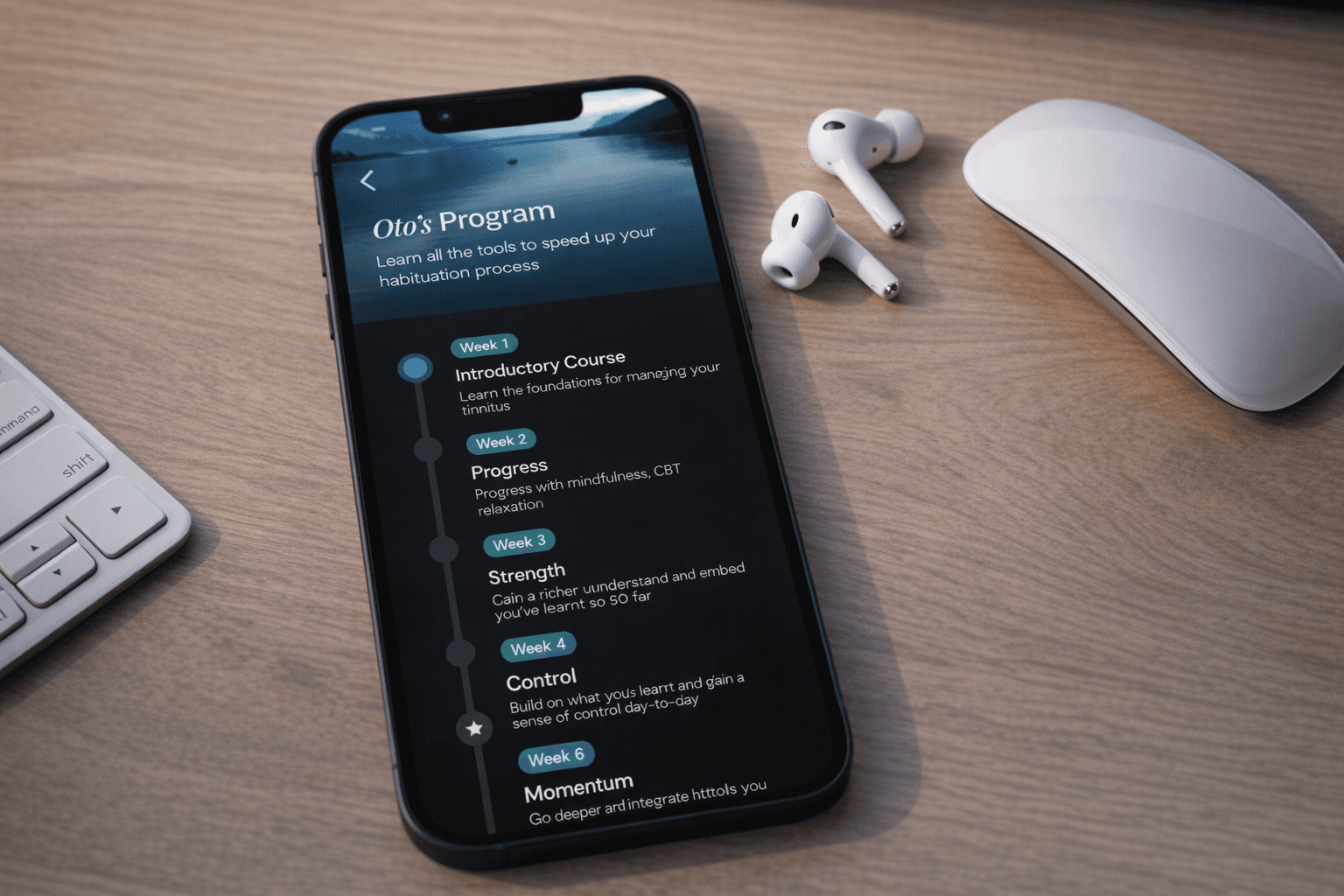
Oto uses this evidence directly by guiding users through short, structured CBT and mindfulness exercises. These strategies help shift tinnitus from a “threat signal” to a “neutral background sound,” which is the foundation of habituation. If utilized for 15 minutes per day, the entire program can be completed in twelve weeks.
Additionally, research in auditory neuroscience shows that consistent sound therapy can reduce auditory pathway hyperactivity and support habituation by lowering neural gain. Oto reinforces this process through daily exposure to calming sounds and guidance that helps stabilize the system.
Together, these mechanisms, calming the nervous system, reshaping emotional response, and introducing consistent sound therapy, create the environment in which tinnitus naturally becomes less intrusive.
Why Is Oto a Big Deal in Tinnitus Care?
For decades, many people with tinnitus were told “nothing can be done,” but this is no longer supported by research. A large and growing body of evidence demonstrates that tinnitus can improve when the brain and nervous system are retrained through CBT, mindfulness-based stress reduction, and sound therapy.
The problem has always been access. Most patients never receive these treatments because tinnitus specialists are limited, many clinics lack training in modern tinnitus care, and misinformation is everywhere.
Oto changes this by delivering clinically grounded retraining tools directly to users. Importantly, research shows that internet-delivered and app-based CBT programs can be just as effective as in-person CBT for tinnitus, meaning people finally have access to treatment techniques backed by decades of scientific research. For many individuals, Oto represents the first genuine tinnitus therapy they’ve ever received, not masking, not distraction, but real cognitive and auditory retraining.
Is Oto Enough on Its Own?
Oto can make a meaningful difference, but tinnitus is rarely caused by one system alone. Research consistently shows that tinnitus involves multiple interacting components, auditory pathways, cognitive-emotional networks, central gain mechanisms, and stress response circuits. This is why the most successful treatment plans combine several approaches rather than relying on a single tool.
Studies on sound therapy and habituation demonstrate that constant or regular sound enrichment reduces auditory hyperactivity and promotes neural stability. That’s something an app alone cannot fully provide without an audiologist's personalization.
Similarly, clinical research shows that outcomes improve significantly when CBT or mindfulness programs are paired with a thorough audiologic assessment, because underlying contributors such as hearing loss, hyperacusis, TMJ involvement, cervical tension, or medication effects must be properly identified.
In short:
Oto retrains the brain
Sound therapy retrains the auditory system
An audiologist coordinates and interprets the entire system
This multi-system model is where research shows the strongest and most consistent improvement.
Why Does Oto Fit So Well with The Sound Relief Method?
The Sound Relief Method and Oto share the same scientific foundations. Modern tinnitus research confirms that long-term improvement occurs when both the cognitive-emotional response and the auditory system response are retrained simultaneously.
“Oto is great, but the real magic happens when Oto meets personalized sound therapy and exceptional audiology care. That combination can truly change lives.”
— Dr. Julie Prutsman, Au.D., CH-TM
CBT and mindfulness have been shown to consistently reduce tinnitus distress, while sound therapy and sound enrichment help stabilize the auditory system and reduce neural gain. Additionally, several studies show that daily practice leads to significantly stronger habituation outcomes compared to infrequent or inconsistent engagement.
Oto provides the daily practice needed for these benefits; The Sound Relief Method incorporates specialized diagnostic testing, prescriptive sound therapy, precision adjustments, and expert coaching to create long-term success.
Together, they address the cognitive distress cycle of tinnitus: the brain, the hearing pathways, and the nervous system, which research shows is the most effective pathway to meaningful, lasting relief.
Who Benefits Most from Oto?
People who struggle with anxiety around their tinnitus, who feel overwhelmed by its unpredictability, or who need step-by-step guidance tend to benefit greatly from Oto. It’s also an excellent option for those just starting their tinnitus journey and seeking a safe, evidence-based place to begin. And for patients already in treatment, Oto can help reinforce and accelerate progress by keeping the brain regularly engaged with therapeutic techniques.
Those without immediate access to a tinnitus specialist often find Oto to be a lifeline. It provides clarity and direction at a time when most people feel confused and unsure of what to do next.
What Results Do People Typically See?
Most users notice improvements in their emotional reactivity, stress levels, and sleep within the first few weeks. As their nervous system becomes less reactive, tinnitus often feels quieter, less intrusive, and easier to ignore. Concentration improves, fear decreases, and the feeling of being “controlled” by tinnitus begins to ease.
When Oto is used alongside customized sound therapy and guided audiology care, these results tend to be stronger, faster, and more durable. The combination addresses all three systems involved in tinnitus, which is why the improvements feel deeper and more stable over time.
Is Oto a Replacement for an Audiologist?
No. Oto was never designed to replace expert care, which is why the full program is only available through an approved audiologist. Tinnitus can be influenced by stress, hyperacusis, TMJ dysfunction, hearing loss, neck tension, neurological patterns, medications, noise exposure, and many other factors. Only a tinnitus-focused audiologist can evaluate all these contributors and design a plan tailored to the individual.
Oto is a powerful supplemental tool, especially for day-to-day practice, stress reduction, and brain retraining. But it is not a medical evaluation, and it cannot uncover the underlying causes of tinnitus. It works best when it fits into a complete care plan.
Why Oto Truly Matters
Not every breakthrough in tinnitus care comes from a drug or a device; sometimes the most meaningful change comes from making proven therapy more accessible, more consistent, and more practical for everyday life. That’s exactly what Oto does. It puts evidence-based tinnitus strategies in people’s hands, so they can use them anytime they need support.
By itself, Oto is empowering and effective. But when combined with customized sound therapy and the expertise of a tinnitus specialist, it becomes a truly transformative, realistic, sustainable pathway to long-lasting relief.
If you would like to learn whether Oto and The Sound Relief Method could help you or someone you love, we’re here for you. Schedule a tinnitus evaluation anytime. We are here to help you take back your peace.
Frequently Asked Questions
What is Oto?
Oto is a clinically designed tinnitus app that combines evidence-backed sound therapy, cognitive behavioral therapy (CBT), and mindfulness techniques. Unlike standard noise-masking apps, it delivers structured, daily exercises that help retrain the brain’s response to tinnitus, shifting it from a distress signal to a neutral background sound.How does Oto work to reduce tinnitus distress?
Oto targets both the auditory system and the nervous system. It guides users through short CBT and mindfulness sessions that lessen emotional reactivity, while its sound therapy component calms auditory pathways. This dual approach, grounded in neuroscience and clinical research, helps create a consistent practice that supports long-term habituation and relief.Can I use Oto on its own?
Oto is a powerful tool for daily practice and managing tinnitus symptoms, but it isn’t a complete replacement for professional evaluation. It’s designed to complement personalized audiological care and tailored sound therapy. An audiologist can provide a full assessment to identify underlying issues like hearing loss or TMJ dysfunction, ensuring that your treatment plan addresses all contributing factors.Who can benefit from using Oto?
Oto is ideal for individuals who struggle with the anxiety and unpredictability of tinnitus, especially those looking for a structured, easy-to-use program. It’s well-suited for both newcomers seeking an accessible introduction to tinnitus therapy and those already in treatment who need a consistent, daily strategy to reinforce progress.What kind of results might I expect from using Oto?
Users typically notice improvements in emotional reactivity, reduced stress levels, and better sleep within a few weeks. As the brain becomes less focused on tinnitus, the sound may feel quieter and less intrusive, ultimately enabling you to regain better concentration and control. When combined with expert audiological care and personalized sound therapy, the benefits of Oto can be even deeper and more stable.